
High Cotton
The Story Behind a Southern Harvest

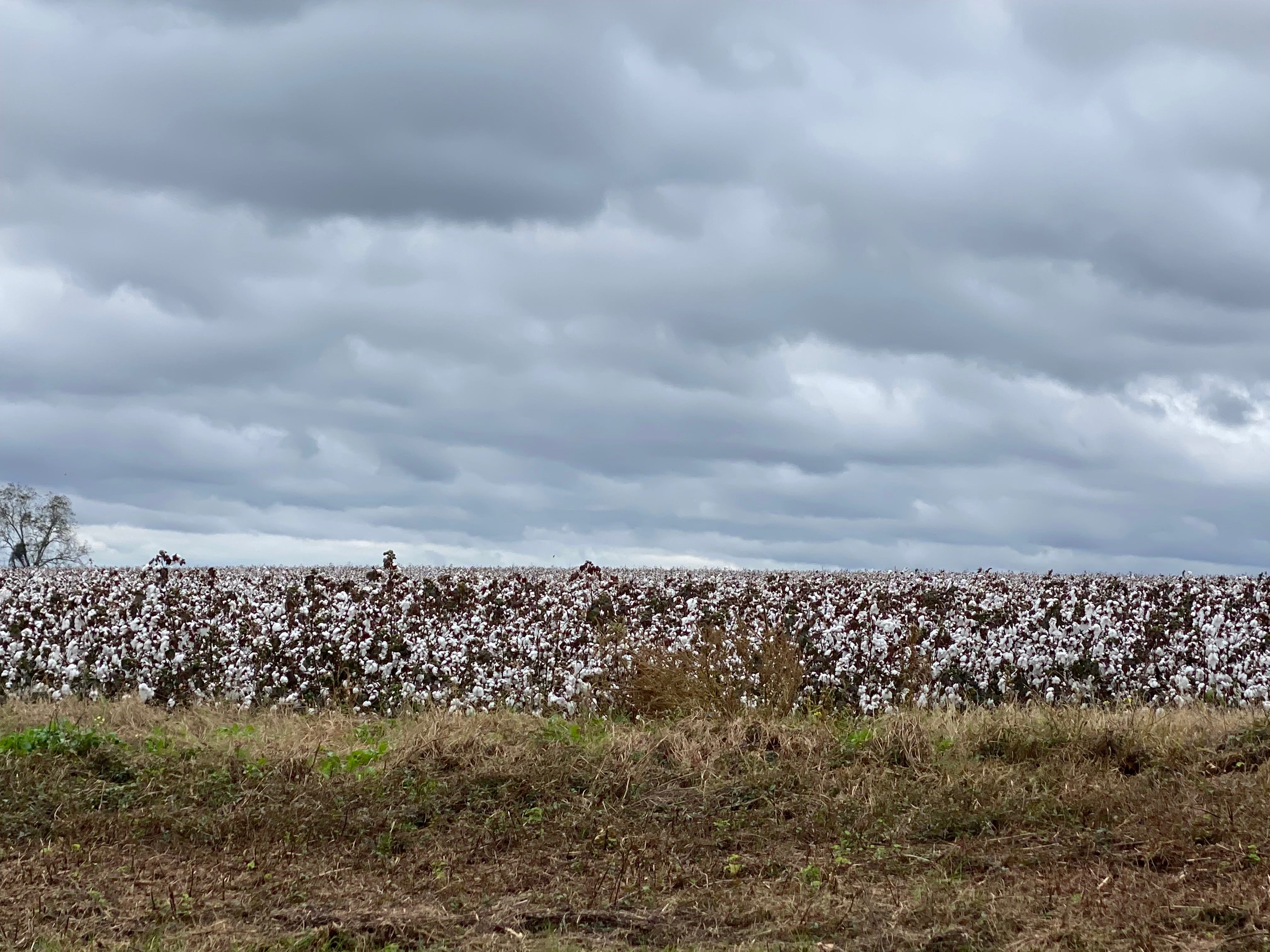
Driving along the roads of Seminole County this week, I couldn’t help but slow down when the sunlight hit the fields just right. Rows upon rows of white cotton like clouds fallen to the ground, the plants heavy with their final blooms. The stray white tufts from the harvest collect along the road shoulder like snowdrifts. The peanut harvest may have stolen the spotlight last month, but now the story shifts to another Southern staple — cotton.
It’s hard not to feel something when you see those fields—a mix of beauty, nostalgia, and history. Growing up, my grandmother would talk about picking cotton in Louisiana, her hands scratched raw from the dry husks. It was tough work, but she never spoke of it with bitterness. To her, it was just part of life, part of what it meant to grow up in the South when every crop mattered. That work also taught her lessons for adulthood, like doing all the household chores for a family with nine children. Can you imagine the dozens of biscuits she made each morning from scratch for breakfast and lunch bags?


What Does “High Cotton” Really Mean?
The phrase high cotton comes directly from the land. When the cotton plants grew tall and abundant, farmers knew it signaled a good harvest — prosperity, relief, and perhaps even a chance to rest easy through the winter. Over time, the saying became a Southern expression for good luck. Someone living comfortably or enjoying a bit of fortune was said to be “in high cotton.”
But the story of cotton isn’t simply one of prosperity. The crop’s roots run deep through America’s complicated history. A history of enslaved labor, tenant farming, and backbreaking work that shaped both the land and its people. Cotton carries significance because it symbolizes more than just fabric; it embodies memories of struggle and resilience for generations of Black and White Southerners alike.
Today, when I say high cotton, I think less of wealth and more of perseverance. The people who worked these fields, from sharecroppers to farm families like my grandmother’s, understood the rhythm of the seasons and the reward that comes from seeing a field ready for harvest.
Cotton in Seminole County Today
Although peanuts and corn now dominate the landscape, cotton still holds a proud place in Georgia’s agricultural history. Georgia typically grows more than one million acres of cotton, making it the most widely grown row crop. This year, the acreage has decreased to an estimated 864,000 acres. Seminole County produces 13,331 acres of cotton.
Georgia has experienced a decline in cotton production due to low prices, high input costs, competition from synthetic fibers, and recent weather events, such as Hurricane Helene. Sluggish global demand and stronger competition from countries such as Brazil have also pushed prices lower, making it hard for farmers to turn a profit.
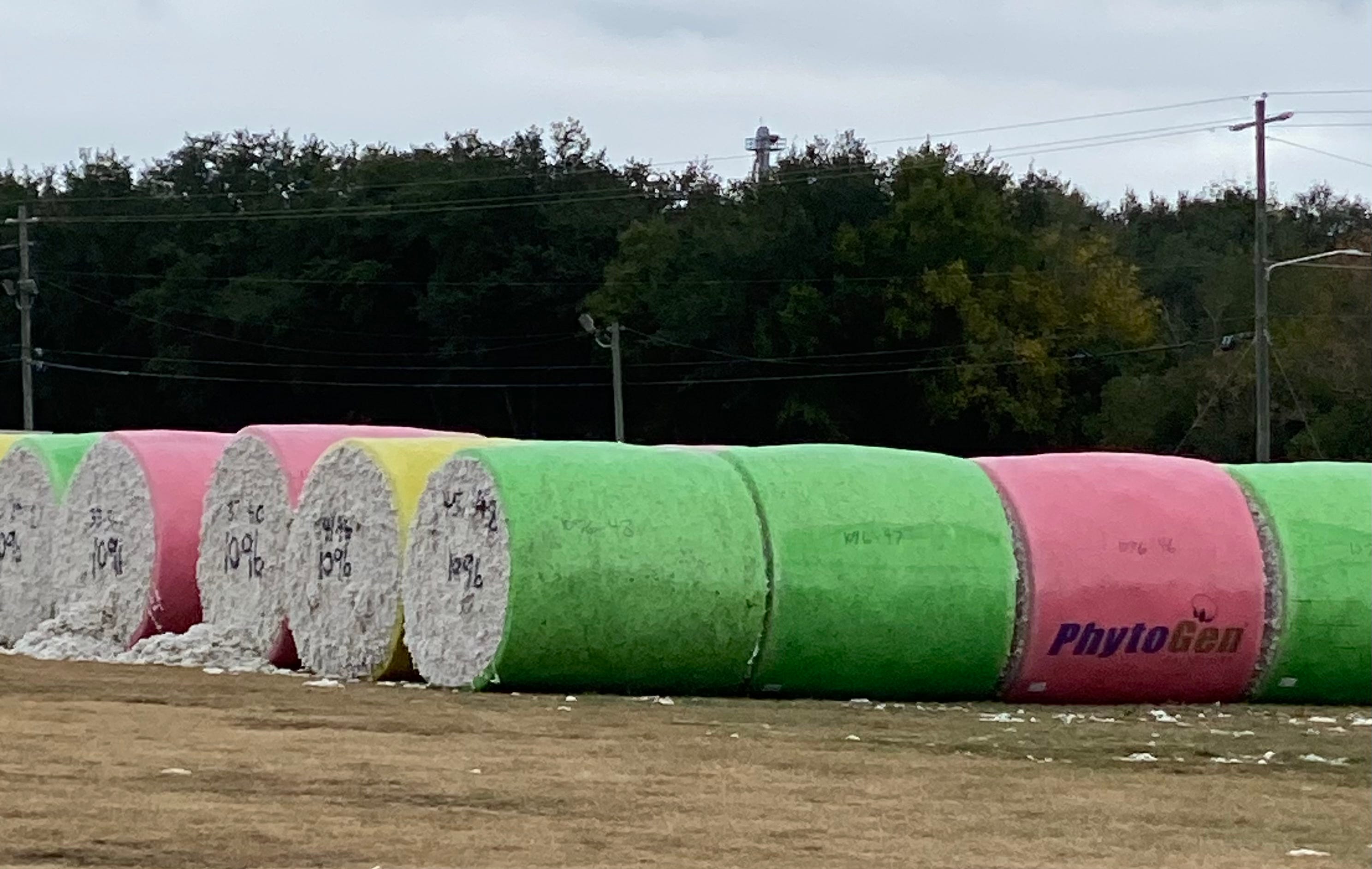
Modern cotton harvesting looks very different from what it was in my grandmother’s era. Large machines now systematically move through the fields, removing and gathering the bolls before packing them into tidy, brightly colored bales of yellow, pink, and green that line the roadsides awaiting transport. It’s a striking scene: those geometric shapes contrasted against the natural curves of the fields, symbolizing both progress and tradition.
Even as demand shifts, cotton remains a source of pride. It’s part of the identity of small towns that once revolved around the rhythm of planting, picking, and ginning. You can still see that legacy in the old cotton warehouses downtown and in the family names on rural mailboxes.
The Future of Fiber
Today’s cotton farmers face new challenges. Synthetic and performance fabrics dominate closets and showrooms because they stretch, breathe, and never need ironing. It’s a far cry from the starched cotton shirts of decades past.
Yet innovation is bringing cotton back into the story of sustainable design:
Nick McMichen, a fifth-generation farmer in Georgia, has partnered with Quail Forever and Cotton Incorporated to plant quail and pollinator habitats on acres considered unproductive as part of a regenerative agriculture project.
In Sandersville, Georgia, Magnolia Loom is collaborating with local farmers, paying nearly double the national cotton price, and creating a local supply chain to produce cotton T-shirts. This demonstrates a commitment to maintaining more value within the state and supporting farmers.
Researchers are finding ways to grow cotton with less water and fewer chemicals, and designers are rediscovering its natural beauty and biodegradability.
As an interior designer, I still believe there’s something timeless about cotton. The feel of a crisp woven fabric on a window shade, the softness of washed cotton slipcovers, and the integrity of a natural fiber that comes from the earth rather than a chemical lab.
This link is an informative 3-minute video about the cotton gin process:
Standing in High Cotton
So, what does it mean to be “in high cotton” today? Maybe it’s less about wealth and more about gratitude for the folks who tilled this land, the ones who bent their backs in the sun, and the new generation finding ways to farm responsibly.
When I stand beside a cotton field, I see more than white tufts blowing in the breeze. I see the resilience of generations of families who turned soil and sweat into something lasting. High cotton, to me, is a moment of grace: a reminder that abundance comes in many forms, and that every harvest, large or small, tells a story worth remembering.
Next time you pass a cotton field, take a moment to really look, not just what’s growing, but the history rooted beneath it. You all may no longer work the land as we once did, but we can still learn from its lessons of patience, persistence, and pride in the work of our hands.
Let me know in the comments if you have enjoyed this Seminole County Fall Harvest Series about Peanuts and Cotton.
Pam, once again you have captured for us outsiders a picture of life in Seminole County, GA. I especially liked you included the picture of “Granny Guillott!”
I learned after moving to Arizona 17 years ago that there are the 5 C’s that describe this great state: Copper, Cattle, COTTON, Citrus, and Climate!
Another great article about one of south Georgia’s leading crops. I love the feel of cotton above all other fabrics. And cotton does have a deep history here in the south, not to be forgotten.