
What Makes a Collaboration Work
A reflection on Robert A.M. Stern and the power of working well together

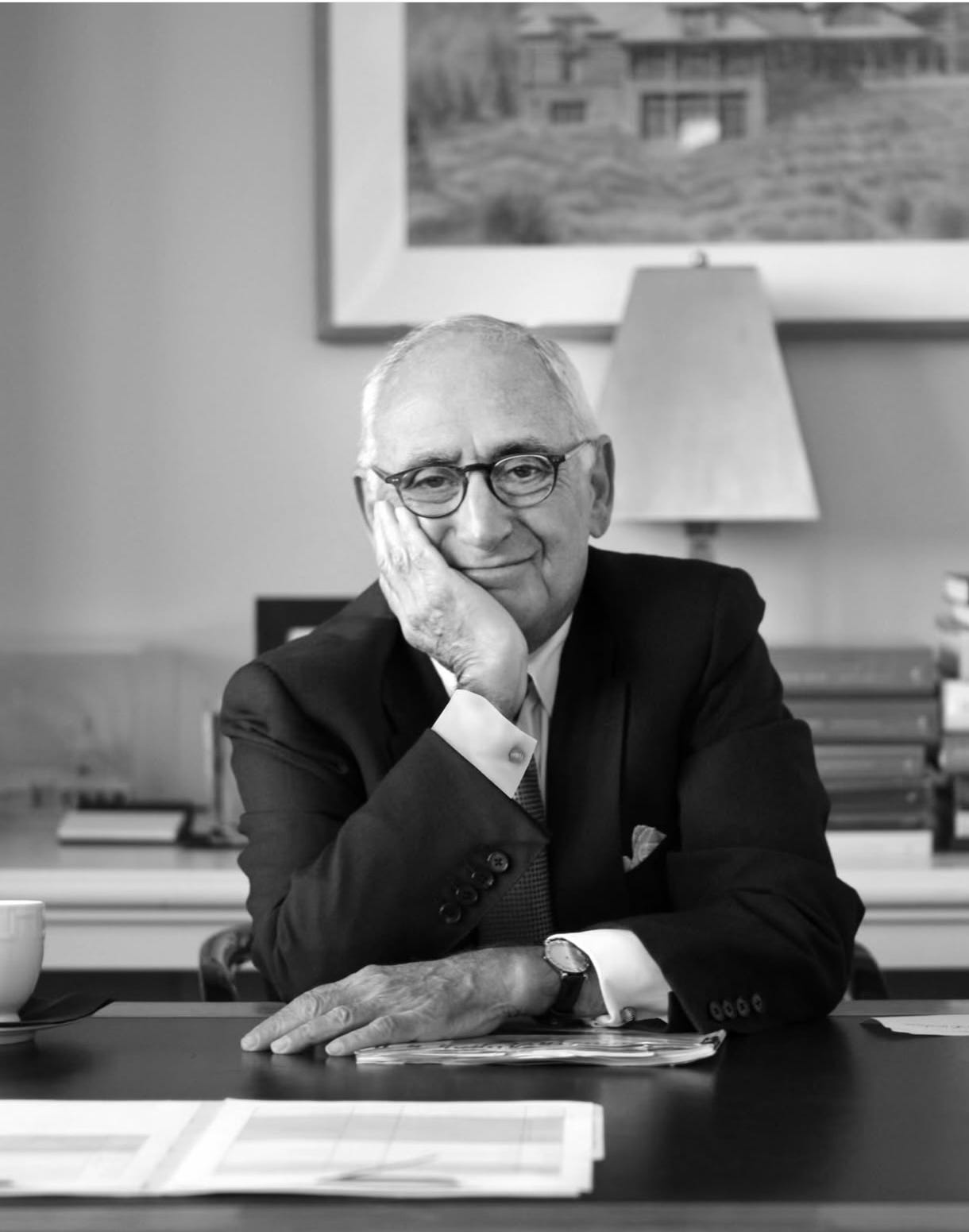
The news of Robert A. M. Stern’s passing arrived on Thanksgiving morning last year, and it brought back a flood of memories.
Like many designers, I admired Bob Stern from afar before I ever worked with him. But admiration is very different from collaboration, and my first high-profile collaboration, with Robert A.M. Stern Architects, remains one of the most formative experiences of my career. It taught me lasting lessons about design, leadership, and what truly distinguishes a successful collaboration.
Columbus, Indiana: a master class in collaboration

In the small town of Columbus, the Cummins Engine Foundation has created one of America’s most architecturally significant communities. Any public institution in town can partner with the Foundation, which covers architectural fees, provided the Foundation selects the architect.
That single requirement changed everything. It elevated design expectations across an entire community.
In 1989, Robert A.M. Stern Architects (RAMSA) was selected to design a new master plan and hospital for Columbus Regional Hospital. At the time, RAMSA was widely recognized for its Modern Classicism in residential and commercial architecture.
Stern’s work was often described as Modern Classicism, but that label only begins to explain his approach. Emerging from his education at Yale as a postmodernist, Bob later described himself as a champion of “modern traditionalism,” which was an effort to put back into architecture what orthodox modernism had stripped away. He believed that architectural history, place, and human experience were not constraints but essential foundations for meaningful design. His work sought to reinvent and reinvigorate a free-spirited modern classicism that strict modernists had written out of history. His approach looked firmly toward the future while remaining deeply informed by the past and the complexities of place. As his successor as Yale Dean, Deborah Berke noted in Yale’s tribute, Bob loved an informed opinion and a rigorous debate. Qualities that defined both his architecture and his collaborations.
Columbus Regional Hospital would be the firm’s first healthcare project. Because of that, the Indiana hospital code agency advised RAMSA to partner with FKP, Inc., a noted healthcare architectural firm based in Houston, where I led the Interiors team.
Creative tension (the good kind)
The two firms did not have an easy working relationship at first. There was creative tension, differing vocabularies, and very different ways of approaching problems. But there was also something far more important: mutual respect.
RAMSA led the overall design vision for the project.
FKP ensured that hospital operations, codes, and clinical functionality were met.
Neither firm tried to be the other. Each brought its own expertise to the table, and that distinction made all the difference.
Together, we helped shape one of the first healthcare institutions to apply a hospitality-forward approach to patient and user experience. After many long meetings, more than a few cocktails, and plenty of time getting to know each other as people, not just professionals, we developed a shared work process that bridged the teams. Eventually, two firms became one team.


The result was an award-winning, timeless medical complex. The design was completed in the early 1990s, but the design still looks relevant. It was a privilege to collaborate with Bob and his team on the design of Columbus Regional Medical Center.
Bob Stern, up close
Beyond the work itself, I treasure the personal moments.
One of my clearest memories is sharing a ride with Bob from Columbus to the Indianapolis airport. Sitting in the back of the town car, I studied his bespoke suit and Gucci suede loafers, immaculate, of course. He was easy to talk to. Warm. Curious. Entirely himself. A true design icon without needing to perform the role.
Years later, after I had left FKP to begin a new chapter in my career as a carpet designer, I ran into Bob again at NeoCon in Chicago. He was launching a new fabric-and-furniture line with Bernhardt.
I was walking the trade show with a colleague, a young carpet designer, someone who never respected me and was convinced she was more qualified and talented than I was. She always approached me with a superior attitude, continually elevating herself by talking up her achievements.
When we entered the Bernhardt showroom, Bob and I embraced and exchanged a quiet hello.
My colleague, the designer, stood there, mouth wide open.
I introduced them. She didn’t speak again until we were back in the corridor.
“I didn’t know you worked with Stern,” she finally said.
I told her, calmly, that there were many things about me she didn’t know, and that maybe she shouldn’t judge people until she really got to know them.
It was a small moment, but a satisfying one. Respect is often earned not by insisting on it, but by doing the work and letting the connections and results speak for themselves.
The lesson I carry forward
So what distinguishes a successful collaboration?
It’s not uniformity.
It’s not ego.
And it’s certainly not surrounding yourself with people who think exactly like you.
The best collaborations are built on difference—diverse creatives bringing distinct expertise, trusting one another enough to stay in the room through discomfort, and allowing creative tension to sharpen the work rather than fracture the team.
Bob Stern understood that instinctively. His legacy is not only the buildings he left behind, but the way he worked with intelligence, generosity, and respect. That lesson continues to guide how I collaborate today. And for that, I am deeply grateful.
What was your most memorable collaboration? Let me know in the comments.
If ever there was a time to learn, do, and reinforce the idea of collaboration -- it's now! Thank you for the reminder of how beneficial and fulfilling it can be. What about an open forum, with your readers, for anyone in need of a collaborator, or just someone to help generate new ideas?